

Auditory Processing Differences in Stuttering: Evidence from Load Theory of Attention
Abstract
Background. The load theory of attention proposes that the detection of irrelevant information depends on perceptual load, with higher load reducing processing of distractors. This framework is relevant to listening effort and auditory scene analysis, where cognitive resources must be allocated across competing sounds. People who stutter (PWS) may rely more on cognitive resources during speech, but it remains unclear whether similar differences extend to non-speech spatial auditory processing.
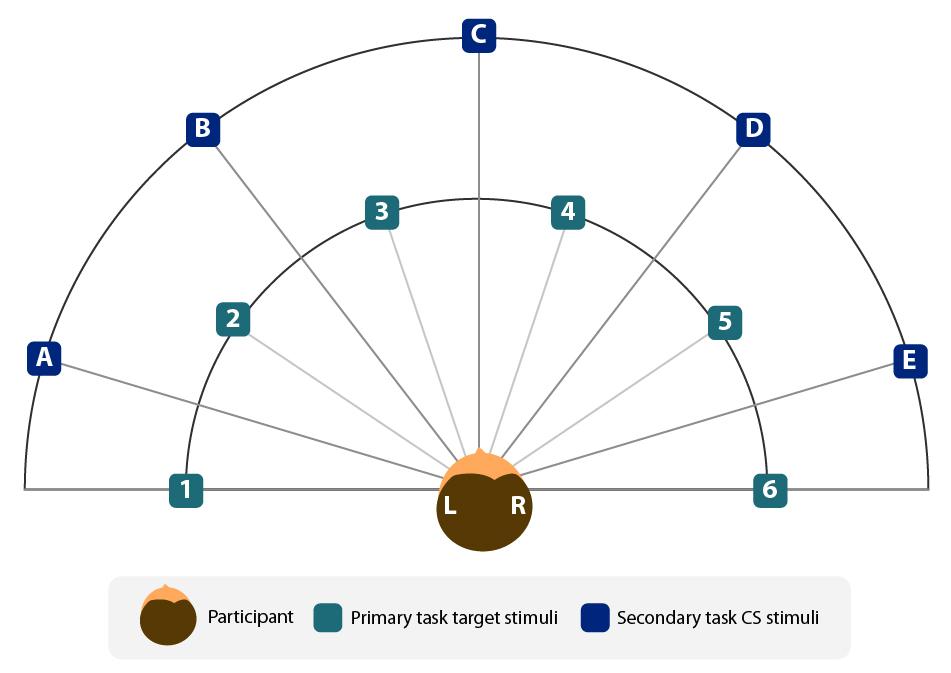
Methods. Twenty-two PWS and 22 matched controls completed a dual-task spatial auditory paradigm with varying perceptual load. Auditory stimuli were spatialised to simulate real-world listening environments. Primary task performance (accuracy and reaction time) and secondary task detection sensitivity (DS) were measured to assess auditory processing under cognitive demand.
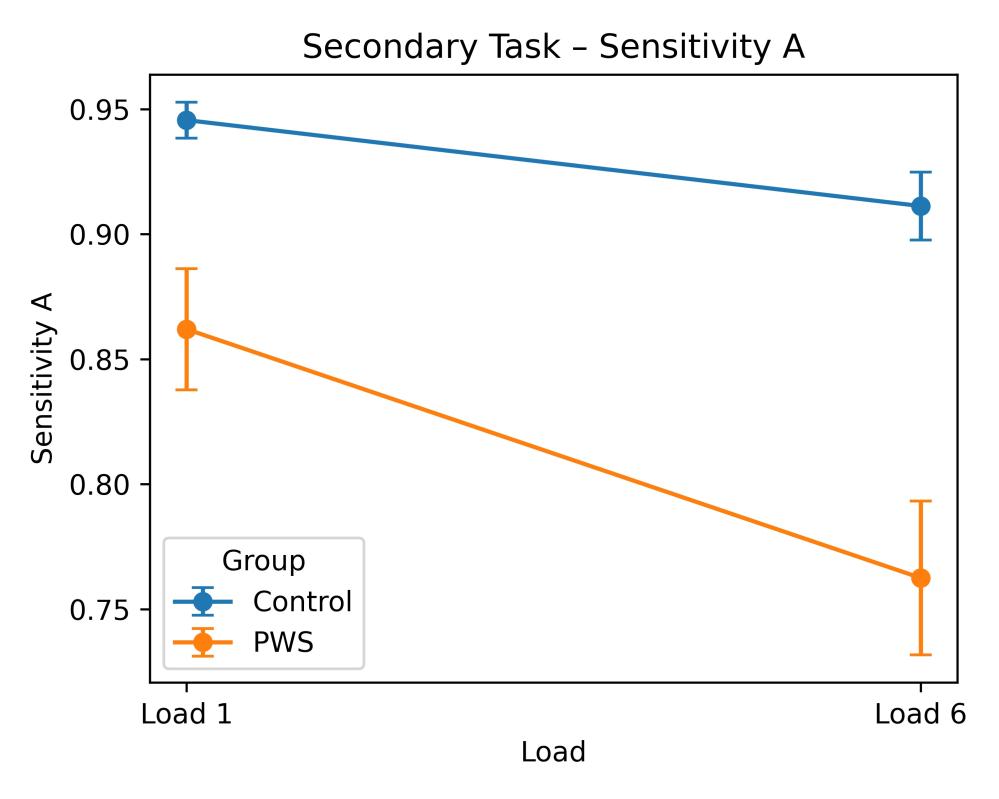
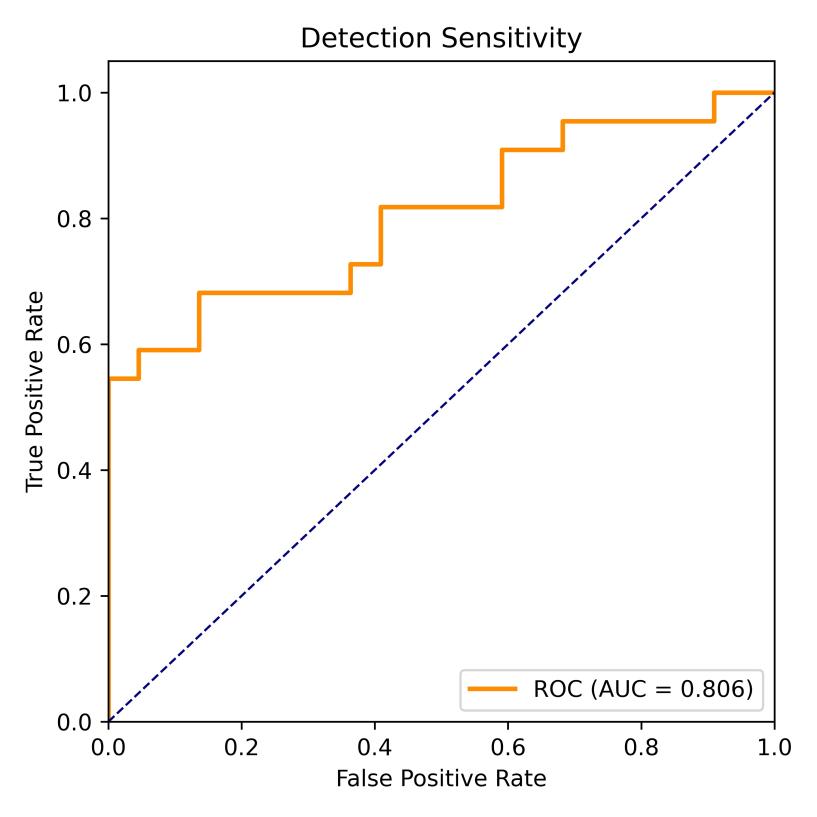
Results. Both groups showed reduced accuracy and increased reaction times with higher load. However, PWS showed lower detection sensitivity overall, with a significant Group × Load interaction indicating greater impairment under high load. Exploratory analysis showed that DS predicted group membership (AUC = 0.81).
Conclusions. These findings suggest reduced auditory processing efficiency in PWS under high cognitive load in spatial listening conditions. The results extend load theory to auditory cognition in stuttering and highlight detection sensitivity as a potential behavioural marker of listening effort in complex acoustic environments.
Figures
Presentation
Publication Details
Links
Suggested Citation
Kazazi, F. (2026, June). Auditory Processing Differences in Stuttering: Evidence from Load Theory of Attention. Podium presentation at the 7th Virtual Conference on Computational Audiology (VCCA 2026), Virtual (on-line). In VCCA 2026 Program & Abstracts book. Zenodo. https://doi.org/10.5281/zenodo.20735749